



Published 28/09/2026 · Updated 28/09/2026 · By Voldt® product team
Germany, France, Spain, Sweden and the UK run open purchase grants for private buyers of electric cars in 2026. Germany pays up to €6 000 and France up to €5 700 plus a European-battery bonus, both depending on household income. Elsewhere the support sits mainly in tax, and in the Netherlands and Germany you can also earn from charging at home.

5 of 12
countries with an open purchase grant, 28/09/2026
Key points
Buying
Open purchase grants for private buyers.
Tax
Lower tax when you buy, or every year.
At purchase
Every year
Home charger
Support pays for an installed charger.
Grant
Tax reduction
Earning
Income from charging at home.
Per kWh
Per car
01 · Buying
Which countries still pay you to buy an electric car?
Germany, France, Spain, Sweden and the UK; we found no open national grant elsewhere on 28 September 2026.
Germany pays €3 000 to €6 000 towards a new battery-electric car first registered since 1 January 2026, for household incomes up to €80 000, or €90 000 with two children (Bundesregierung, May 2026). France indicates €3 500 to €5 700 for a new EV under €47 000, plus up to €2 000 for a European-made battery (economie.gouv.fr, December 2025).
In Spain and the UK, the car decides the amount. Spain's Auto+ pays up to €4 500, scored on how electric, affordable and European the car and its battery are, until 31 December 2026 or until the €350 million budget is used (Spanish Industry Ministry, August 2026). The UK Electric Car Grant takes up to £3 750 off new cars priced at or under £37 000 (GOV.UK).
Sweden targets rural households earning at most 80% of the average income: SEK 1 300 a month for 36 months towards a new or used EV (Naturvårdsverket, June 2026). France's social leasing, renewed on 16 July 2026, caps the rent at €200 a month for low-income households who drive for work (info.gouv.fr).
Fig. 1
Open purchase grants for private buyers, 28 September 2026

Germany
€3 000 to €6 000
New battery-electric car, household income up to €80 000
First registered since 1/1/2026
France
€3 500 to €5 700
Plus up to €2 000 for a European battery; new EV under €47 000
Apply before you sign
Spain
Up to €4 500
Scored on electric, price and European build
Until 31/12/2026 or budget used
Sweden
SEK 1 300 a month
For 36 months; rural households, new or used
Apply by 30/06/2029
UK
Up to £3 750
New EV at or under £37 000
Taken off the price
Source: Bundesregierung; economie.gouv.fr; Spanish Industry Ministry; Naturvårdsverket; GOV.UK. Checked 28/09/2026.
Voldt® tip
Check the scheme page on the day you sign. Spain pays in order of application, and Poland's NaszEauto budget was fully requested on 27 January 2026, three months before its closing date.
02 · Tax
Which tax breaks do electric cars still get, and when do they change?
Mostly at registration or in yearly road tax, and several shrink on dates already set.
At purchase, Norway charges no VAT on the first NOK 300 000 of an EV's price (Norwegian Customs, January 2026). Denmark charges EVs registered in 2026 40% of the calculated registration tax, minus DKK 161 300 (Danish Tax Agency, 2026). Finland charges no car tax on EVs taken into use since October 2021 (Finnish Ministry of Finance), and Poland exempts them from excise duty (Excise Duty Act).
Germany exempts pure electric cars first registered by the end of 2030 from vehicle tax for up to ten years, until 2035 at the latest (Bundestag, December 2025). Dutch EVs pay 70% of the petrol-car road tax since January 2026, up from a quarter in 2025 (Belastingdienst). UK EVs pay £10 in the first year, then £200, plus a supplement above a £50 000 list price (GOV.UK, 2026/27).
Fig. 2
When the EV tax breaks change
How to read
Each bar is the tax break an EV gets: longer bar, bigger break. The dark bar is the rule on 28/09/2026.
UK · Vehicle tax
Until 03/2025
Free
Since 04/2025
No break
£10 in year one, then the £200 standard rate
Netherlands · Road tax
2025
75% off
2026
30% off
Off the rate for a petrol car
Denmark · Registration tax
2026
60% off
2027
52% off
2028 to 2035
Smaller every year
2036
Full tax
Plus a DKK 161 300 deduction in 2026
Germany · Vehicle tax
Now
Free
After the exemption
50% off
Pure EVs first registered by 2030, until 2035 at the latest
Norway · VAT
2025
First NOK 500 000 VAT-free
2026
First NOK 300 000 VAT-free
25% VAT on the rest
Source: GOV.UK; Belastingdienst; Norwegian Customs; Danish Tax Agency; Bundestag. Checked 28/09/2026.
03 · Home charger
Who pays towards a home charger?
Where support exists, it pays for an installed charger, as in the UK and Sweden.
The UK grant covers 75% of buying and installing a charge point socket, up to £500 since April 2026, for people who rent or who own and live in a flat. You need your own off-street parking, an eligible car and an OZEV-authorised installer, and funding is confirmed until 31 March 2027 (GOV.UK).
Sweden takes 50% of labour and material off the installer's invoice, up to SEK 50 000 per person per year across the whole grön teknik reduction; material bought alone does not qualify (Skatteverket). France's €500 tax credit only covered spending up to 31 December 2025 (impots.gouv.fr).
Fig. 3
What each charger scheme asks of you
UK
75%, up to £500
You rent, or own and live in a flat
Your own off-street parking
An eligible car
An OZEV-authorised installer
Funding to 31/03/2027
Sweden
50%, up to SEK 50 000 a year
You own the home
A company does the installation
Covers labour and material
Material bought alone
France
75% tax credit, up to €500
Ended 31/12/2025
Source: GOV.UK; Skatteverket; impots.gouv.fr. Checked 28/09/2026.
Voldt® tip
Book the installer before you order the charger: the UK grant pays only through an OZEV-authorised installer, and Sweden's reduction only when a company does the work.
04 · Earning
Can you earn money from charging at home?
Yes, in the Netherlands per kWh and in Germany per car, paid for by fuel suppliers.
Since 2026, Dutch households can register the electricity they charge at home as emission reduction units (EREs), which fuel suppliers buy to meet their obligation. You need a charging point at home with a built-in MID-certified meter and the grid connection in your name, and a booking service provider who sells the EREs and can share the proceeds. The NEa sets no price and lists a standard 10 cents per kWh as a misunderstanding (NEa, April 2026).
Germany pays per car. For charging outside public networks, the Federal Environment Agency certifies a flat annual estimate for each battery-electric car, which private traders sell on to fuel companies before paying the owner (UBA). Sweden's electricity credits cover public charging only (Swedish Energy Agency, 2025).
Fig. 4
Two ways charging at home earns money
Netherlands
Per kWh
Charging point with built-in MID meter
Booking service provider
NEa register
Fuel suppliers
Share to you
Germany
Per car
Registered battery-electric car
UBA flat estimate
Trader
Quota-obliged fuel companies
Payout to you
Source: NEa; Umweltbundesamt. Checked 28/09/2026.
Voldt® tip
Ask an ERE provider to confirm in writing that your charging point qualifies before you sign, because the contract runs to 31 December.
05 · Without a wallbox
What if you can't install a charger at home?
Then no charger scheme applies, and a portable charger from a household socket is the practical route.
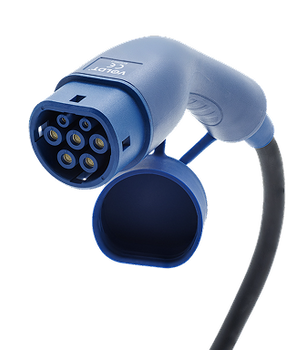
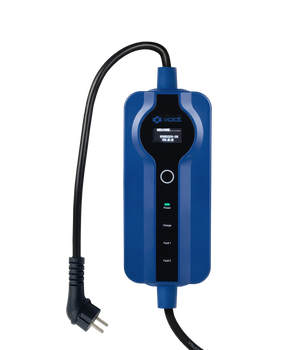
Both Voldt® portable chargers below plug into an ordinary household socket, so nothing is installed and they move house with you. The Portable OCPP Charger adds a MID-compliant meter that records every session's kWh, useful if your employer repays home charging (see our reimbursement rules in 12 countries). Your German THG quota stays the same, as it is paid per car. For Dutch ERE, the NEa names a charging point at home with a built-in meter, so ask a booking service provider first.
Our verdict
Claim the purchase grant first where one is open, because several pay in order of application until the budget is used. Plan with tax breaks that shrink on dates already set, and count any charging income as a bonus.
01
Check the scheme page on the day you sign, and apply first where the rules ask.
02
Keep the order, invoice and registration papers together.
03
Budget each tax at the rate for your registration date.
Buy it if
you rent or cannot install a wallbox, and you park within reach of a household socket.
Skip it if
you qualify for an installed charger through the UK grant or Sweden's tax reduction, or you want Dutch ERE income.
Voldt® portable chargers

Portable charger, Schuko
Single-phase, 8 to 16 A · up to 3,7 kW. For overnight charging from a house socket.

Portable OCPP Charger, Basic set
Schuko and Type 2 adapters · MID-compliant meter and OCPP. Records the kWh of every session.
Safe use and warranty
- Use only the charger's own Voldt® adapters, plugged straight into a sound, earthed socket, never an extension lead.
- Have an electrician check that a household circuit carries 16 A for hours before nightly use.
- Where your car's manual differs from this guide, follow the manual.
Voldt® cables and portable chargers are CE marked and TÜV certified, with a 3-year warranty; terms and exclusions are on the warranty and complaints page.
CE · TÜV · IP67 · 3-year warranty · 100-day returns
Frequently asked questions
Do used electric cars qualify for purchase grants?
Sweden's premium covers new and used cars; Germany, France and the UK pay towards new cars only.
Do plug-in hybrids qualify?
Sometimes. Germany's grant includes some plug-in hybrids from €1 500. France's premium and Germany's vehicle-tax exemption cover fully electric cars only.
Do I need a wallbox to get Germany's THG quota?
No. The quota for home charging is a flat estimate per registered battery-electric car, so the charger makes no difference (UBA).
Is ERE income a subsidy?
No. The NEa calls it a market system in which fuel suppliers buy the units, so there is no fixed amount per kWh.
Does Denmark still refund electricity tax on home charging?
It continues through registered charging operators, but with the general tax at 0,8 øre per kWh excluding VAT in 2026 and 2027, the saving is small.
I drive a company car. Which rules apply to me?
The reimbursement and company car tax rules, which our overview for 12 countries covers.
Voldt® product team, product development and support
Develops Voldt® charging cables and portable chargers and answers the questions that reach Voldt® support.