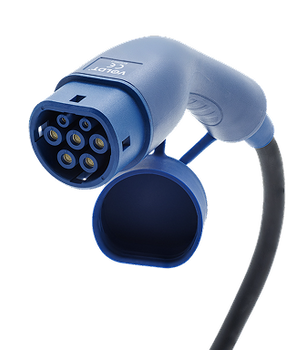
BYD SEAL U PHEV Charging cable

BYD SEAL U PHEV Charging cable


7,4kW
The BYD SEAL U PHEV has a charging capacity of 7,4kW. So we recommend using a charging cable of atleast 7,4kW for optimal charging speeds.

22kW cable compatible
However, please be aware that a 22kW cable is perfectly capable of charging at 7,4kW. With a 22kW cable you'll have guaranteed optimal charging speeds in the event of a new car or a possible upgrade in charging capacity.

Do you need to charge at a charging station or wall socket?

BYD SEAL U PHEV Specifications

7,4kW

32

1 Phase

Type 2

18.3kWh

110km

45km/h

2:30h

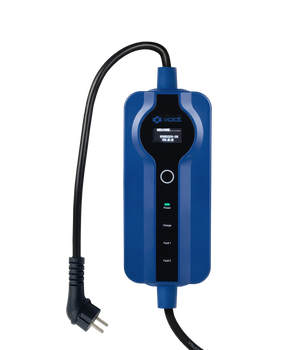
BYD SEAL U PHEV compatible portable charger

Our portable chargers also lets you charge the BYD SEAL U PHEV at a regular or a CEE wall socket.

What customers say about Voldt

BYD SEAL U PHEV Charging cable

  • BYD SEAL U PHEV Connector type:

  • BYD SEAL U PHEV Mobile versus fixed charging:

  • BYD SEAL U PHEV Charging speed:

  • Discover the range and charging capabilities of the BYD SEAL U PHEV

  • Connecting your BYD SEAL U PHEV to a charging station or outlet

For those considering buying a charging cable for the BYD SEAL U PHEV, or simply looking for more information on the best way to charge this electric car, it is essential to know the compatibility and specifications well. And with the above details, you are already well on your way. When looking for the perfect charging cable for your BYD SEAL U PHEV in our webshop, you can rely on these details to make the right choice.

Is the specific EV charging cable you are looking for still not among them? Then take a look at our full range of type 2 charging cables or all our mode 3 charging cables or check out our range of portable charging cables.

Couldn't find the right charger?

Thank you for submitting your form!

We appreciate your interest and will review your information as soon as possible.

Our team is dedicated to providing excellent customer service, and we will do our best to respond promptly.

Collection: BYD SEAL U PHEV Charging cable

The BYD Seal U DM-i is BYD's first plug-in hybrid to reach Europe, pairing the company's Super DM (Dual Mode) technology with its cobalt-free lithium iron phosphate Blade Battery. Three trim levels cover a broad range of needs: the Boost and Comfort are front-wheel drive with a 1.5-litre naturally aspirated petrol engine and a 145 kW electric motor producing a combined 160 kW and 300 Nm, while the range-topping Design adds all-wheel drive via a 1.5-litre turbo, a 150 kW front motor and a 120 kW rear motor for a combined 238 kW and 550 Nm. Boost and Design share an 18.3 kWh battery delivering up to 80 km (50 miles) and 69 km (43 miles) of electric range respectively, while the Comfort's larger 26.6 kWh pack extends that to 125 km (78 miles). Acceleration from 0–100 km/h takes 8.9 seconds in the Boost, with the Design reaching the same mark in 5.9 seconds. All trims top out at 170 km/h. The onboard AC charger is rated at 11 kW on a three-phase supply and 7.4 kW on single-phase, with DC charging at up to 18 kW via CCS2. The Type 2 charging port sits on the right rear flank.

Wallbox charging times for the BYD Seal U DM-i

The Seal U DM-i's onboard charger supports both three-phase and single-phase AC supplies. At a three-phase wallbox with a correctly rated Type 2 cable, the charger draws its full 11 kW. The 18.3 kWh battery (Boost and Design) charges from empty to full in approximately 1 hour and 50 minutes once typical efficiency losses of around 10 % are accounted for. The Comfort's 26.6 kWh pack takes around 2 hours and 40 minutes: quick enough to top up during a working-from-home afternoon.

On a single-phase 32 A home wallbox, the charger operates at 7.4 kW provided the cable supports 32 A on a single phase. The 18.3 kWh battery completes a full charge in approximately 2 hours and 45 minutes, and the 26.6 kWh in around 3 hours and 55 minutes. Both sit comfortably within an evening window, which matters for a plug-in hybrid: keeping the battery topped up daily is the key to maximising electric-only driving and minimising fuel use.

An 11 kW three-phase cable on a single-phase wallbox creates a bottleneck. The cable's 16 A per-phase rating limits the single available phase to 3.7 kW, roughly halving the charge rate. The 18.3 kWh battery then takes around 5 hours and 25 minutes, and the 26.6 kWh close to 8 hours. For any Seal U DM-i owner on a single-phase supply, a cable rated at 32 A per phase is the correct choice.

DC rapid charging on the move

All Seal U DM-i variants include 18 kW DC rapid charging via CCS2, a feature not all plug-in hybrids offer. The 18.3 kWh battery charges from 30–80 % in approximately 35 minutes and from 10–80 % in around 50 minutes; a full 0–100 % session takes roughly 75 minutes. The 26.6 kWh Comfort takes approximately 55 minutes for 30–80 % and around 75 minutes for 10–80 %, with a full charge in about 110 minutes. At 18 kW, DC is best used as a convenient top-up on longer journeys rather than a primary charging method, but the ability to add meaningful electric range during a lunch stop or motorway break is a genuine advantage over PHEVs that lack any DC capability.

The right Type 2 cable for the Seal U DM-i

The Seal U DM-i's charger draws 16 A per phase on a three-phase supply (11 kW) and up to 32 A on a single phase (7.4 kW). The cable recommendation depends on your home electrical setup.

At a three-phase wallbox or public AC station, an 11 kW Type 2 cable is the correct match: it delivers the full 11 kW the car can accept. On a single-phase 32 A home wallbox, however, an 11 kW cable restricts current to 16 A on that single phase, limiting charge to 3.7 kW. A 22 kW cable, rated at 32 A per phase, removes this bottleneck and delivers the full 7.4 kW.

A 22 kW cable covers both scenarios without compromise: 11 kW on three-phase, 7.4 kW on single-phase. It is the recommended choice for most Seal U DM-i owners. It also future-proofs the purchase for any subsequent vehicle that supports higher-rate AC charging.

Cable lengths and parking

The charging port on the right rear flank means reversing towards the wallbox generally places the port closest to the charger. In UK parallel parking situations, this puts the port on the offside, so pulling slightly past the post before reversing in can help keep the cable short and tidy.

Voldt® Type 2 cables are available in 4, 6, 8, 10, 15, 20, and 40 metre lengths. A 4 m cable suits a dedicated home setup where the wallbox sits directly beside the parking spot. For most driveways and garages, 6 m provides comfortable reach. An 8 m cable works well for both home and public use, while 10 m adds flexibility at public charge points where the post may be further from the bay. A 15 m cable covers hotel car parks, wider bays, and longer driveways. The 20 m and 40 m lengths serve commercial, depot, and specialist installations.

Portable charging with a CEE charger

A Voldt® portable CEE charger adds considerable flexibility to the Seal U DM-i's charging options, particularly for a plug-in hybrid that benefits from regular top-ups.

At a 32 A or 16 A three-phase CEE socket (red, five-pin, found at industrial sites and workshops), the charger draws its full 11 kW across all three phases. The 18.3 kWh battery charges in approximately 1 hour and 50 minutes; the 26.6 kWh in around 2 hours and 40 minutes. These are fast enough to make an industrial CEE socket a genuinely practical mid-day top-up point for owners who have access to one at a workplace or commercial premises.

At a blue 16 A single-phase CEE socket, the standard hook-up at holiday campsites and caravan parks across Europe, output is limited to 3.7 kW. The 18.3 kWh battery takes around 5 hours and 25 minutes for a full charge; the 26.6 kWh, roughly 7 hours and 55 minutes. Plugging in on arrival at a campsite comfortably restores a full battery overnight for either variant. Red three-phase CEE sockets are not standard campsite infrastructure: they belong to industrial premises, workshops, and some commercial marinas.

From a standard European household socket (Schuko), continuous output is limited to a safe 2.3 kW (10 A). The 18.3 kWh battery charges in approximately 8 hours and 45 minutes, making an overnight Schuko charge a practical everyday option for the smaller battery. The 26.6 kWh Comfort takes around 12 hours and 45 minutes: possible overnight if plugged in early, but slower than most owners would prefer for regular use.

Voldt® charging cables are CE, UKCA and TÜV certified and manufactured according to IATF 16949 automotive quality standards. Single-piece moulded connectors, no glue or screws. IP67-rated for operation between −30°C and +50°C. 100% copper conductors with silver-plated contacts. Tested beyond 10,000 connection cycles. Three-year warranty, 100-day returns, free shipping across Europe.