



Bidirectional charging allows your electric vehicle to send stored energy back to the grid, your home, or connected devices. For EV owners across Europe, this is no longer a distant concept. Compatible vehicles and wallboxes are entering the market, regulatory barriers are falling, and the first real-world earnings from vehicle-to-grid programmes are being reported. Here is how it works, what you need, which cars support it, and what the practical outlook looks like in 2026.
| Topic | Key Insight |
| What it is | Technology that enables EVs to both draw and return energy, to the grid, your home, or external devices |
| Three types | V2L (Vehicle to Load), V2H (Vehicle to Home), V2G (Vehicle to Grid), each with different hardware requirements |
| Compatible EVs | Hyundai Ioniq 5 & 6, Kia EV6 & EV9, BYD Dolphin, Cupra Born, VW ID. range (partial rollout), and others |
| Hardware needed | A compatible vehicle, a bidirectional wallbox (for V2H/V2G), a smart meter, and a quality Type 2 charging cable |
| Wallbox cost | Bidirectional DC wallboxes start around £6,000/€7,000 before installation; AC-based V2G chargers expected to cost significantly less |
| Battery impact | Managed bidirectional cycling within moderate charge ranges shows minimal additional degradation in current research |
| European outlook | Germany removed double grid fees in late 2025; the Netherlands runs Europe's first V2G car-sharing system; the UK issued its first grid certification for AC-based V2G |
What Is Bidirectional Charging?
Standard EV charging is a one-way process: electricity flows from the grid into your car's battery. Bidirectional charging adds a return path, allowing stored energy to flow back out and into your home, connected devices, or the wider electricity grid.
The technology comes in three forms, each with different levels of complexity and different hardware requirements.
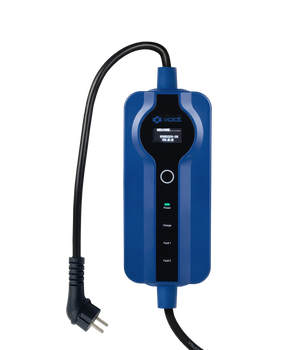
V2L (Vehicle to Load) is the simplest form. Your EV can power external devices such as tools, camping equipment, or household appliances. Most V2L-capable vehicles deliver this power through the Type 2 charging port, which means you will need a V2L adapter to convert the port into a usable household socket. Once equipped, no additional infrastructure is needed.
V2H (Vehicle to Home) uses your EV's battery to power your household. This requires a compatible bidirectional wallbox and the right home wiring setup. V2H can serve as backup power during outages or as a way to offset peak-rate electricity consumption, drawing from energy stored in your car during cheaper off-peak hours.
V2G (Vehicle to Grid) is the most complex and the most commercially interesting. Your EV feeds energy back into the public electricity grid. This requires a bidirectional wallbox, a smart meter, and an agreement with your energy supplier. In return, V2G participants can earn revenue by selling stored energy when grid demand is high.
How Does Bidirectional Charging Work?
Your EV's battery stores energy as direct current (DC). Your home and the electricity grid operate on alternating current (AC). During standard charging, a converter, either inside the car's onboard charger or built into the wallbox, handles the AC-to-DC conversion. Bidirectional charging adds the reverse: a DC-to-AC path that allows energy to flow back out of the battery.
For V2L, this conversion happens inside the vehicle itself. For V2H and V2G, the bidirectional wallbox manages the conversion, along with communication protocols that coordinate when energy flows, in which direction, and how much.
Smart energy management is central to the value proposition. With a dynamic energy contract, your system can automatically charge the battery when electricity prices are low (typically overnight or during periods of high renewable generation) and discharge stored energy when prices peak. Paired with solar panels, bidirectional charging lets you store surplus solar production in your EV during the day and use it to power your home in the evening, maximising your self-consumption rate and reducing reliance on grid electricity.
Which Electric Vehicles Support Bidirectional Charging in Europe?
Support depends on the type of bidirectional charging you are looking for. V2L is now widely available; V2H and V2G remain more selective.
V2L (widely available)
Many modern EVs sold in Europe include V2L capability, either as standard or as an option. The Hyundai Ioniq 5 and Ioniq 6, Kia EV6, EV9 and Niro EV, BYD Atto 3 and Dolphin, MG ZS EV, and Genesis GV60 and GV70 Electric all offer V2L support. Most of these vehicles require a V2L adapter to convert the Type 2 port into a standard power outlet. The feature is becoming standard across new model launches.
V2H and V2G (growing but still selective)
Full vehicle-to-home and vehicle-to-grid capability requires both hardware and software support from the vehicle manufacturer, paired with a compatible bidirectional wallbox. As of mid-2026, confirmed V2H or V2G-capable vehicles available in Europe include:
- Kia EV9: the first mainstream family SUV to offer V2H in the UK, with a 99.8 kWh battery providing several days of household backup
- Hyundai Ioniq 5 and Ioniq 6: V2H/V2G via CCS with compatible hardware
- Kia EV6: CCS bidirectional support enabled via firmware update (2024+)
- Cupra Born: confirmed V2H and V2G via the Wallbox Quasar 2 over CCS
- VW ID.3, ID.4, ID.5, ID.7: CCS bidirectional firmware in partial rollout
- Renault 5 E-Tech: CCS DC bidirectional, launching as part of a V2G programme with The Mobility House
- BYD Dolphin: V2G-capable and already bundled with wallbox-and-tariff packages in the UK
Mercedes-Benz has announced bidirectional charging for the new electric GLC in 2026, and BMW's entire Neue Klasse platform will support bidirectional charging from the outset. Nissan's new-generation Leaf, expected from spring 2026, drops CHAdeMO in favour of CCS and will receive V2G capability via an over-the-air update.
A note on CHAdeMO: The Nissan Leaf (older generations) pioneered V2G in Europe using the CHAdeMO connector. While this remains functional, CHAdeMO is being phased out across Europe in favour of CCS. For long-term compatibility, CCS-based bidirectional charging is the standard to invest in.
Tesla: As of mid-2026, Tesla has not enabled bidirectional charging on any consumer model. Tesla's preferred home storage solution remains the Powerwall.
What Do You Need to Get Started?
The requirements scale with the type of bidirectional charging you are aiming for.
For V2L: a compatible vehicle with V2L support, a V2L adapter (for most models), and whatever devices you want to power. No additional infrastructure needed.
For V2H: a compatible vehicle, a bidirectional wallbox, and appropriate home wiring. Your electrician will need to ensure the setup meets local regulations and that the wallbox can safely island your home from the grid during a power outage. You will also need a private driveway or dedicated parking space with charger access.
For V2G: everything listed for V2H, plus a smart meter and an energy contract that supports feed-in from your vehicle. Your energy supplier needs to be set up to receive and compensate you for energy exported from your car. In the UK, this means a tariff such as Octopus Energy's Power Pack programme; other European markets have their own emerging V2G tariff structures.
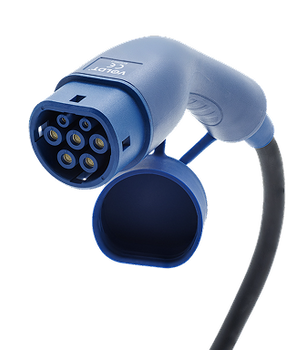
Across all three types, the cable connecting your car to the wallbox matters. A certified, weatherproof Type 2 charging cable rated for your vehicle's maximum charging speed ensures safe and efficient energy transfer in both directions. Voldt® cables are CE, TÜV, and UKCA certified with an IP67 rating, built for daily use in all conditions and available in lengths from 4 to 15 metres.
Benefits of Bidirectional Charging
Lower energy costs
By charging during off-peak hours and discharging stored energy when rates are highest, bidirectional charging can meaningfully reduce your electricity bill. With a dynamic energy contract, the system handles this automatically: buying low and using high, without manual intervention. A V2G pilot project in Portugal demonstrated savings of up to €20 per month per participant through intelligent charge and discharge scheduling.
Revenue from grid services
V2G participants can earn money by selling stored energy back to the grid during peak demand. In the UK, early participants in Octopus Energy's Power Pack programme have reported credits large enough to offset their household electricity costs entirely. According to Agora Verkehrswende, German private users could earn up to €500 per year through electricity market participation. As more compatible vehicles, wallboxes, and energy programmes become available, these earnings opportunities will scale.
Grid stability and reduced strain
As EV adoption grows, bidirectional charging helps balance supply and demand across the electricity grid. Rather than adding pressure during peak hours, V2G-equipped EVs can absorb surplus renewable energy when supply is high and feed it back when demand rises. According to Transport & Environment, V2G technologies could save more than €100 billion in European system costs between 2030 and 2040 by reducing the need for fossil-fuel peaker plants, grid expansion, and costly network upgrades.
Better use of renewable energy
Solar panels generate most of their energy during the middle of the day, when household consumption is often at its lowest. Bidirectional charging lets you store that surplus in your EV's battery and use it in the evening, raising your self-consumption rate and reducing the amount of solar energy that goes unused or is exported at low feed-in tariffs.
Emergency backup power
A fully charged EV battery typically holds between 40 kWh and 100 kWh of energy. For context, average European household consumption sits around 8 to 10 kWh per day, meaning a V2H-capable EV could keep your home running for several days during a power outage. The Kia EV9, with its 99.8 kWh battery, offers one of the largest V2H reserves currently available.
Practical Questions Answered
Does bidirectional charging damage my battery?
This is one of the most common concerns, and the evidence so far is reassuring. Research from multiple European universities and V2G pilot programmes indicates that managed bidirectional cycling, where charge and discharge stay within moderate state-of-charge ranges (typically 20% to 80%), adds minimal additional wear compared to standard daily driving and charging. Some studies suggest that the smart charge management required for V2G may actually benefit battery health by avoiding prolonged periods at very high or very low charge levels.
That said, battery warranty terms vary by manufacturer. Not all warranties explicitly cover V2G use yet, so it is worth checking with your vehicle manufacturer before enrolling in a V2G programme.
How much does a bidirectional wallbox cost?
Bidirectional DC wallboxes are significantly more expensive than standard home chargers. The Wallbox Quasar 2, the most widely referenced option, carries a European list price of approximately €7,188 (around £6,100), before installation. Add installation costs of £1,500 to £3,000 depending on your electrical setup, and the total investment is substantial. It is worth noting that as of mid-2026, the Quasar 2 is entering the market via pre-registration rather than open retail: European distribution began in late 2025, but wide commercial availability and full integration with mass tariffs like Octopus Power Pack are still pending.
However, the cost landscape is shifting. Nissan has committed to launching an affordable AC-based bidirectional charger, designed to bring wallbox costs closer to those of a conventional home charger. V2G-ready chargers (not yet bidirectional, but upgradeable via firmware) are already available at a fraction of the price. As more manufacturers enter the market, prices are expected to fall significantly over the next two to three years.
What is the regulatory situation across Europe?
Regulation is advancing rapidly, though unevenly across markets.
Germany passed a landmark amendment to its Energy Industry Act (EnWG) in November 2025, removing the double grid fee that previously made V2G uneconomical. From April 2026, simplified MiSpeL process rules further reduced technical and regulatory barriers to implementation. A second meter is no longer required.
The Netherlands has been a frontrunner. Utrecht operates Europe's first comprehensive V2G car-sharing system since summer 2025, a joint initiative by Renault, We Drive Solar, MyWheels, and the city of Utrecht. Active V2G pilots and supportive policy frameworks make the Netherlands one of the most advanced V2G markets in Europe.
The United Kingdom issued its first G99 grid certification for AC-based V2G to Nissan, and in March 2025 mandated V2G capability for all new commercial charging installations rated above 22 kW. OFGEM is preparing broader regulatory adjustments to support residential V2G.
At EU level, the AFIR Regulation now requires all new public charging points to support ISO 15118-2 (from January 2026), with the requirement extending to ISO 15118-20 for new installations from January 2027. ISO 15118-20 is the key standard for CCS-based bidirectional communication, and its mandatory adoption will drive cross-manufacturer interoperability across Europe.
When will bidirectional charging become mainstream?
It depends on which type. V2L is already mainstream: it comes standard on a growing list of new EVs at no extra cost. V2H is entering commercial availability, with compatible wallboxes on the market and installation services expanding across European countries. V2G is in its early-adopter phase, limited by the number of compatible vehicles, wallbox availability, smart meter rollout, and energy supplier programmes. Industry consensus points to 2027 to 2028 as the period when CCS-based V2G reaches broader commercial availability, with interoperable, standardised solutions across multiple manufacturers and markets.
Where Voldt® Fits In
Whether your EV charges in one direction or two, the cable connecting your car to the charger plays a critical role. A reliable, certified Type 2 cable ensures safe energy transfer at your vehicle's maximum supported rate, in both directions.
Voldt® Type 2 charging cables are built for daily use across all conditions: CE and UKCA certified, TÜV tested, and rated IP67 for complete dust and water protection. Available in lengths from 4 to 15 metres with a 3-year warranty and 100-day hassle-free returns, they are designed to match the demands of any home charging setup, whether unidirectional or bidirectional. Free shipping, always in stock.